Gin Rummy Classic
SATORISYS PLAYCard
4.6243.00 Reviews
- Version
- 1.0.5
- Installs
- 100.00K
- Age Rating
- Teen
Screenshots
Our Review of Gin Rummy Classic
 Analysis by Appyee
I usually know within a few sessions whether a card game deserves a permanent place on my phone or is only useful for filling a quiet few minutes. Gin Rummy Classic made a good first impression because it focuses on a familiar two-player card game instead of surrounding it with unnecessary distractions. Developed by SATORISYS PLAY, this free card game is aimed at people who want to sit down, play a hand, and leave without learning a complicated interface.
That simplicity is its main appeal, but it also creates the central question: does a traditional gin rummy experience remain interesting after the novelty wears off? My answer is cautiously positive. It works best as a dependable short-session game for players who enjoy planning, memory, and risk management. It is less convincing for anyone looking for a deep collection of modes, a strong social layer, or constant new content.
Why the first week feels easy to enjoy
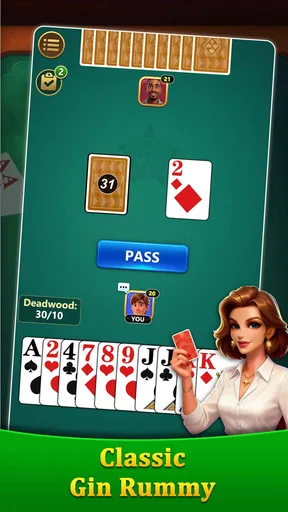
The basic rhythm is immediately recognizable. I draw a card, decide what to keep, discard something that no longer fits, and try to build useful groups or runs before the other side does. That familiar structure makes the game approachable even if I have not played gin rummy recently. I do not need to absorb a large rulebook before making sensible decisions, which is exactly what I want from a casual card game.
The free price removes the biggest barrier to trying it. The game is listed for Teen audiences, so it is not presented as a children’s title, but the card-game premise itself is straightforward. It is also available for devices running Android 7.1 or later, which gives it a broad practical reach for people using older compatible phones rather than only recent hardware.
During the first week, the strongest quality is the low commitment. A hand can fit into a short break, a bus ride, or the few minutes before bed. I can play without preparing a long session or worrying about losing progress in a large campaign. That makes it a better companion for fragmented time than many strategy games that need sustained attention.
The opening sessions also show why gin rummy is more interesting than it first appears. The visible cards tell only part of the story. I have to remember what has been discarded, judge whether an opponent’s pickup reveals a likely run, and decide when a promising combination is too slow to complete. A card that looks helpful in isolation may be dangerous to keep because it leaves too many possible draws before the hand ends.
One useful early habit is to avoid treating every pair as equally valuable. If I hold two cards that could become a set but also keep several disconnected cards, my hand may look flexible while actually becoming difficult to finish. I get better results by asking which cards have multiple realistic paths and which ones are merely hopeful. That small change makes the game feel more deliberate without making it complicated.
The first-week experience is also a good test of whether you enjoy uncertainty. Gin rummy does not let planning guarantee success. A sensible discard can still be followed by an awkward draw, while an opponent may complete a hand sooner than expected. I like that tension, although players who prefer games with complete control may find the luck frustrating.
Another practical question is whether it is comfortable to play one-handed. For me, a card game of this type is most useful when I can glance at the screen, make a decision, and continue with my day. The experience suits that pattern better than games that demand constant movement or rapid reactions. It is a thinking game, but not one that requires a full desk and uninterrupted concentration.
The early audience response suggests that the straightforward approach is connecting with players. The game has a 4.7 average from around 2.6 thousand ratings, while its install count has passed 100 thousand. Those figures do not prove that every player will enjoy the same style, but they do fit my impression that the simple, traditional format has a clear audience.
What makes the card decisions worthwhile
The most satisfying moments come from reading possibilities rather than merely collecting matching cards. If I discard a card that seems harmless, I may be giving the opponent the missing piece of a run. If I hold it too long, I can trap my own hand with a card that has no useful partner. The game rewards patience, but not passive waiting; I need to keep revising my plan after every draw.
I also find it useful to separate “good cards” from “good information.” An opponent’s discard can be more valuable as a clue than as a card I want to pick up. If several cards from one range disappear, I can adjust my expectations and stop chasing a combination that is becoming unlikely. This is the kind of small observation that gives repeat sessions more texture than the store summary would suggest.
For a realistic everyday example, I might open a hand during a lunch break with only enough time for a few decisions. Instead of trying to force a perfect arrangement, I can use the short session to practice safer discards: remove isolated high-value cards early, watch which cards the opponent accepts, and avoid revealing a useful sequence unless the alternative is worse. Even when I lose, that session has a clear lesson rather than feeling completely wasted.
Whether it keeps its place after the novelty fades
After the first month, the question changes from “Is this fun?” to “What brings me back?” For me, the answer is the compact decision loop. I can return when I want a quiet mental exercise, especially when a larger game feels like too much work. Traditional gin rummy has enough uncertainty and memory-based play to remain pleasant across repeated hands, provided I already enjoy the underlying game.
Its recurring value depends heavily on personal taste. A player who likes improving at one familiar ruleset may find a comfortable routine here. Someone who needs new cards, characters, events, or changing objectives will probably feel the limits sooner. The experience is built around replaying the same core activity, so the long-term appeal comes from sharper judgement, not from a steady stream of new material.
I would describe it as a good habit game rather than a destination game. It is something I can keep installed for small gaps in the day, not something I would choose when I want a major evening of entertainment. That distinction matters. The game does not need to replace larger card collections or multiplayer platforms to be useful, but it should be judged honestly on how well it supports short, repeatable sessions.
The latest listed version is 1.0.4, and the developer is SATORISYS PLAY. That version information is useful when checking whether a device is compatible or whether an update is available, but it does not change the basic nature of the experience: this remains a focused classic card game. I would not install it expecting a broad ecosystem around the title. I would install it because I want this particular style of play available quickly.
One month-to-month strength is that the game can serve different moods without changing its identity. When I want to think carefully, I can analyze the discard pile and calculate which combinations are still plausible. When I am tired, I can play more casually and accept that imperfect choices may cost the hand. That flexibility helps it survive longer than a game that is enjoyable only when I am fully alert.
There is also a useful learning curve hidden inside the simple rules. At first, I focus on making melds. Later, I pay more attention to deadwood, timing, and the opponent’s likely hand. Eventually, I start considering when not to draw a tempting card because it communicates too much or leaves me with an awkward remainder. The game does not need elaborate progression systems to offer improvement; the player supplies the progression.
How much attention and upkeep it demands
The maintenance burden is low in the practical sense that the game is free, compact in concept, and easy to understand. I do not need to manage a collection, learn a rotating ruleset, or keep up with a complicated competitive schedule. That makes it appealing for anyone who wants a stable card game rather than a second hobby.
Still, low maintenance does not mean zero friction. A focused card game can feel repetitive if I play too many hands in one sitting. Because the core loop is intentionally narrow, I cannot rely on a campaign, a changing board, or a large set of unrelated activities to refresh my attention. The best way to keep it enjoyable is to stop while I am still interested instead of grinding through fatigue.
That is an important maintenance tip: treat sessions as small exercises, not as a quota. I get more value from a few thoughtful hands spread across the week than from forcing a long streak in one evening. Short breaks also make it easier to notice my own mistakes. If I rush, I tend to keep cards based on wishful thinking; if I return later, I can see the same patterns more clearly.
The game is also easier to maintain as a personal routine because its rules do not require frequent relearning. I can leave it alone for a while and come back without feeling lost. That is a real advantage over more elaborate alternatives, where missing updates or events can make returning feel like starting over. Here, familiarity is part of the design.
On the other hand, players who expect visible ongoing development may find the focused format less satisfying. A traditional card game can remain perfectly playable without constant change, but that also means there may be fewer reasons to check in when I am not already in the mood for gin rummy. Its staying power comes from the game itself, not from an external reward calendar.
Where repeated play can become tiring
The main source of fatigue is sameness. The same basic draw-and-discard structure that makes the game accessible can eventually feel narrow. If I want a card app that takes me from solitaire to poker-style challenges to collectible deck construction, this is not the right choice. It is better to think of it as a clean single-purpose tool than as a complete card-game library.
Luck can add another kind of tiredness. Even when I make careful choices, the cards may not cooperate, and a strong-looking plan can collapse. I appreciate that uncertainty because it prevents every hand from becoming automatic, but repeated unlucky outcomes can test my patience. Players who dislike losing because of draws should choose a game with more direct control or a stronger puzzle structure.
The opponent’s presence can create pressure even in a quiet session. Every discard becomes a possible gift, and every pickup can reveal information. That is engaging when I want to concentrate, but it is not ideal when I am trying to play absent-mindedly. If I need something completely relaxing, a simple solitaire game may be a better alternative because it removes the need to track another player’s intentions.
There is also a trade-off between authenticity and variety. Keeping the experience close to classic gin rummy preserves its identity, but it limits the number of ways to refresh a stale session. I would rather see this title remain coherent than add unrelated mechanics just to create noise, yet that choice naturally narrows its audience. Its restraint is a strength for traditionalists and a weakness for novelty seekers.
For players comparing it with online multiplayer card platforms, the decision is straightforward. Those alternatives are usually better when the important part is competing with friends, meeting other players, or building a social routine around matches. This game is a better fit when I want a private, quick, familiar contest without committing to a broader community or a more demanding competitive environment.
Compared with a physical deck, the app wins on convenience. I can start immediately, play in a small space, and avoid setting up or collecting cards. A real deck remains better for face-to-face conversation and shared table time, though. I would not use this as a replacement for playing with family or friends in person; I see it as the option for moments when nobody else is available.
The Teen content rating is another reason I would consider the audience before recommending it. The rating does not make the game unsuitable for adults, but parents choosing a card game for a younger child may prefer to inspect the platform’s current rating details themselves rather than assume it is designed for children. For adult casual players, the classification is unlikely to affect the appeal of the core card play.
Who should install it and who should pass
I would recommend it to someone who already likes gin rummy, wants a free mobile version, and values quick access over a large feature set. It is especially suitable for commuters, people taking short breaks, and players who enjoy improving through observation. The low entry barrier also makes it a sensible way to return to the rules after years away from the table.
I would be more cautious with a player who needs social competition, dramatic presentation, or a constant sense of unlocks. This is not where I would send someone who wants a collectible deck-building experience or a game that changes substantially from week to week. The same focused design that keeps it approachable may make it feel underpowered for that audience.
For new players, my practical advice is to watch the discard pile before chasing a combination. Keep track of what the opponent refuses as well as what they take, because both actions provide information. I also try to reduce isolated high cards before the hand becomes urgent, while remembering that discarding too predictably can make my own strategy easier to read. These habits make the game more rewarding without requiring advanced terminology.
For experienced players, the useful challenge is restraint. It is tempting to keep a nearly complete run for too long, especially when the missing card feels close. I have better sessions when I set a mental limit on how long I will wait for a narrow draw and then switch to a more flexible hand. That approach does not remove luck, but it reduces the number of losses caused by refusing to change plans.
Another small workflow helps during short sessions: decide before each discard whether I am optimizing my own hand or denying the opponent information. Those goals are not always the same. A discard that improves my immediate flexibility may also complete the other player’s likely meld, while a defensive choice can leave my own hand slower. Thinking in those terms gives each move a purpose and prevents automatic tapping.
My long-term verdict
Gin Rummy Classic earns lasting space on my phone, but only in the right role. I see it as a reliable, low-commitment card game rather than a deep all-purpose entertainment app. Its free access, familiar rules, broad Android compatibility, and strong player response make it easy to try, while the strategic tension of reading discards gives it more staying power than a purely luck-based pastime.
Its limitations are equally clear. The focused format can become repetitive, luck can be frustrating, and players seeking social features or a large variety of modes will find better alternatives elsewhere. I would not recommend it as the only card game on a device unless gin rummy is already one of your favorites.
For me, the deciding factor is habit. I can leave it installed, return after a gap, and understand what I am doing within a hand. That kind of dependable re-entry is valuable, especially when I want a few minutes of quiet concentration rather than a new system to learn. The lasting appeal comes from improving small decisions, not from chasing constant novelty.
So my recommendation is simple: install it if you want a straightforward gin rummy companion that respects short sessions and rewards attention. Skip it if you need a social card platform, frequent content changes, or a wider selection of games. As a free classic card experience from SATORISYS PLAY, it does not try to be everything, and its best quality is that it knows exactly what kind of player it is serving.
Privacy and Permissions
See what permissions an app requests and how it handles your data.
- Wi-Fi connection information
- view Wi-Fi connections
- Other
- view network connections, full network access, control vibration, prevent device from sleeping, Google Play license check
Verdict
Strengths of Gin Rummy Classic
- Clear card layouts make hands easy to read on smaller screens.
- Offline play lets you enjoy matches without a data connection.
- Adjustable difficulty suits both casual and experienced players.
- Quick rounds work well for short gaming sessions.
- Simple controls make discarding and drawing cards feel intuitive.
Limitations of Gin Rummy Classic
- Limited variation may make the experience repetitive over time.
- Ads can interrupt play, especially in the free version.
- Computer opponents may feel predictable at lower difficulties.
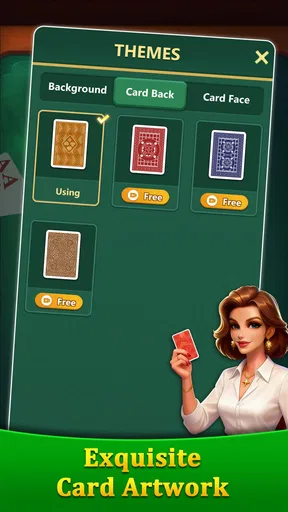
- Few customization options are available for cards and tables.
- Online competition features may be limited compared with newer rivals.
Other Releases by SATORISYS PLAY
View All
Ball Sort - Color Puzzle Game
Casual4.7

Line Dash
Casual4.7

Gin Rummy King
Card4.7

Word Connect Master
Word4.6
Similar Picks in This Category
View All
Solitaire - Classic Card Games
MobilityWare4.6

UNO!™
Mattel163 Limited4.3

Spider Solitaire: Card Games
MobilityWare4.6

Solitaire.com - Classic Cards
Tripledot Studios Limited4.7

Plants vs. Zombies™ Heroes
ELECTRONIC ARTS4.1

Hearthstone
Blizzard Entertainment, Inc.4.1
Frequently Asked Questions
What is Gin Rummy Classic, and how is the game played?
Gin Rummy Classic is a digital version of the traditional two-player card game, designed for quick matches against computer opponents or, depending on the version, other players. The objective is to arrange your cards into sets and runs while reducing unmatched cards, known as deadwood. You draw and discard cards each turn, then knock or go gin when your hand is ready to score.
Can I play Gin Rummy Classic offline?
One of the main advantages of Gin Rummy Classic is that it is generally suitable for offline play against artificial intelligence. This makes it convenient for travel, waiting rooms, or situations without a reliable internet connection. However, features such as advertisements, online leaderboards, cloud synchronization, updates, or multiplayer modes may require an internet connection, depending on the app version and your device.
Is Gin Rummy Classic suitable for beginners?
Yes. Gin Rummy Classic is usually accessible to beginners because the core controls are straightforward: select or draw a card, organize your hand, and discard one card. New players should still learn the scoring system, including the difference between knocking and going gin. Difficulty settings or adjustable computer opponents can also help users gradually improve rather than facing an overly challenging match immediately.
Does Gin Rummy Classic include different difficulty levels or customization options?
Most versions of Gin Rummy Classic provide some level of customization, such as choosing an opponent difficulty, changing card or table designs, adjusting sound effects, or selecting preferred scoring rules. The exact options vary between Android and iOS releases. Before downloading, check the current store listing because features may differ by platform, region, app update, or edition of the game.
Is Gin Rummy Classic free to download, and does it contain advertisements or in-app purchases?
Gin Rummy Classic may be available as a free download, but free editions commonly include advertising and may offer optional purchases to remove ads or unlock additional features. The pricing model can differ between Android and iOS, so reviewing the store page is recommended before installation. Also check the app’s permissions and privacy information to understand how advertising or analytics services may be used.
Play our best games!


